
Blog | It’s 2026, and Staying Focused Has Never Been Harder

It’s 2026, and Staying Focused Has Never Been Harder
I’m not a pastor. I’m a technology executive. I’ve spent nearly 20 years watching this industry reshape how humans think, work, and relate to each other. And what I’ve watched happen to leaders in the corporate world has evolved rapidly in the past several years.
AI can now do most of what took me 20 years to learn. It writes, analyzes, strategizes, and executes faster than any team I’ve ever managed. The innovations are remarkable. But here’s what nobody in my industry wants to say out loud: the same tools replacing what we do are exposing what we’ve been avoiding.
AI can’t show up for a marriage. It can’t be present with your kids. It can’t pray. It can’t repent. It can’t be transformed.
The more AI takes over our outputs, the more our only irreplaceable contribution is who we are. For the people you lead, that’s not a productivity insight. That’s a theology of personhood.
This is not a productivity problem. This is an alignment problem.
The same technology that promised to free us has fragmented us. Depression and anxiety are rising sharply in every demographic, including inside your church. The endless scroll, the pressure to perform, the constant comparison… it has cost your church something. It has cost them presence. Depth. The one thing no platform can manufacture: inner stillness.
“Remain in me, and I will remain in you… apart from me you can do nothing.” — John 15:4–5
The world is not designed to help your people remain. It is designed to pull them away, faster and louder every year. The question for every church leader reading this isn’t whether distraction is real inside your congregation. It’s whether you have something to put in their hands to fight it.
Here’s what I’ve observed from the outside looking in: most people, regardless of their faith, have systems for everything except the life underneath their responsibilities.
Career plans. Financial goals. Fitness routines. Almost nothing intentional for the whole person. They optimize everything outward and manage everything inward on willpower alone. That gap is exactly where drift starts.
And drift does not announce itself. It doesn’t show up in a crisis. It shows up in a marriage that is managed but not led. A faith that is present but not practiced. A body that is running on empty. A calling that has been quietly set aside for the demands of the urgent.
The people filling your seats on Sunday are not failing because they lack faith. Many of them are drifting because they lack a framework.
“What does it profit a man to gain the whole world and forfeit his soul?” — Mark 8:36
Most people say they want alignment. What they actually want is less stress, more control, and better outcomes. That’s not alignment. As you know, biblical alignment looks like discomfort. Obedience without full clarity. Sacrifice before reward.
There are four domains every person is responsible for stewarding: their spiritual life, their relationships, their physical health, and their calling. When those four are integrated and intentional, life has a foundation. When they’re not, people perform well until they can’t.
Drift doesn’t happen to lazy people. It happens to disciplined ones, because discipline without being intentional means executing harder in the wrong direction. The most high-functioning people I know are also the most quietly fractured. Their calendar reflects their output goals but not their actual convictions. Most of them already know something is off. They just don’t have a system to close the gap.
I felt this in my own life. Hitting my numbers in business. Leading well by every external measure. Quietly losing ground in every area that actually mattered. I wasn’t in a crisis, I was just drifting.
What changed was treating my whole life as a stewardship responsibility across all four domains, not just my work. When I did, everything got better, not worse.
I built VIGR8 because I believe the people in your congregation need exactly this. A stewardship operating system for the whole life, built on daily rhythms across all four domains. Something they can put their hands on Monday morning, not just Sunday morning. If this resonates, try it free for 14 days: vigr8.com. No pitch. Just the system.
“Be still, and know that I am God.” — Psalm 46:10
Stillness isn’t passivity. In 2026, for people carrying the weight of work, family, and purpose all at once, it is the most courageous and countercultural thing they can choose.
And yes, I know the irony. A tech executive pointing you to a technology app. But technology itself isn’t the enemy. Distraction is. I built VIGR8 with one intention: to use technology for good. To give your congregation a system that creates space for stillness, not more noise. One that reinforces their convictions instead of competing with them.
The same industry pulling the world apart can build something that pulls it back together, if we’re intentional about it.
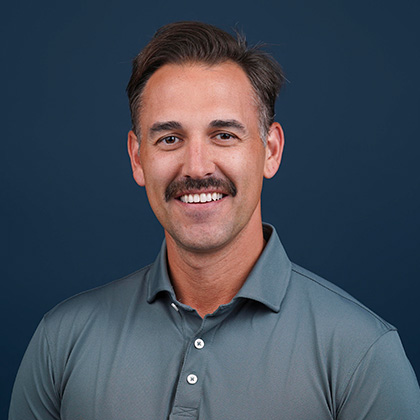
About the Author
Jeff Holmseth is the creator of VIGR8, an app designed to help people pursue God’s righteousness and live out their full, God-given potential. Jeff has spent 20 years in enterprise technology sales, helping organizations drive strategic growth and navigate complex technology decisions. More than anything, his faith in Jesus Christ is what drives him. A devoted husband and proud father of two boys, Jeff founded VIGR8 because he believes every person was created for more.